






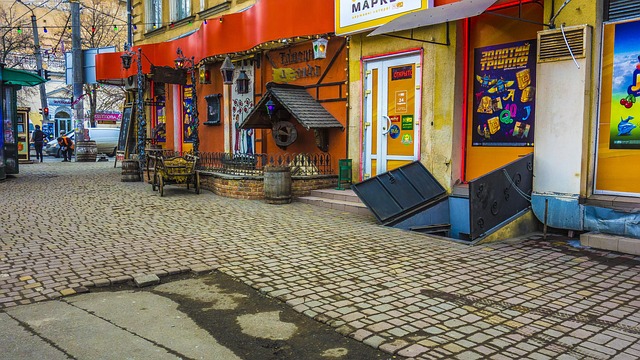
Albany Paving Contractor emphasizes thorough preparation for paver stone installation, including surface correction, soil testing, and debris removal. Meticulous planning, high-quality materials, and professional execution ensure durable, attractive results. Proper sealing and striping by an Albany Paving Contractor enhance aesthetics and longevity, with sealants extending surface life up to 50%.
Paver stone installation is a crucial aspect of outdoor space transformation, especially for those seeking to enhance their home’s curb appeal or create functional areas. However, the process can be complex, often leaving homeowners unsure where to begin. This is particularly true in regions like Albany, where climate variations demand durable and versatile paving solutions.
As an authority in the field, this article guides you through the intricate world of paver stone installation, offering insights that cater to both novice DIY enthusiasts and those seeking expert advice from an Albany Paving Contractor. We’ll explore techniques, best practices, and materials to ensure your project stands the test of time.
- Preparing Your Outdoor Space for Paver Stone Installation
- Step-by-Step Guide to Successful Paver Layout and Setting
- Completing the Look: Sealant Application and Final Touches with Albany Paving Contractor
Preparing Your Outdoor Space for Paver Stone Installation

Before installing paver stones, it’s crucial to prepare your outdoor space meticulously. Albany paving contractors emphasize the significance of this initial step, as it lays the foundation for a durable and aesthetically pleasing pavement system. The process involves assessing the existing surface, correcting any imperfections, and ensuring proper drainage to prevent water damage. For instance, if your yard has a slight slope, addressing this gradient is essential to keep water from pooling around the pavers.
Preparation also encompasses removing all debris, such as grass, weeds, and rocks, from the installation area. Using specialized tools like hammers and chisels can help break up stubborn roots and loose stones, ensuring a smooth base for your new pavement. Additionally, testing the soil’s compactness is vital; poorly compacted soil can lead to uneven settling of pavers, resulting in cracks and gaps over time. In cases where the ground is particularly soft or unstable, professionals may recommend installing a subbase layer for enhanced stability.
Once your outdoor space is ready, you’re not just limited to paver stone installation—it opens doors for complementary services like pavement marking and painting to enhance functionality and safety. Moreover, regular maintenance through specialized paver repair can extend the life of your pavement, keeping it looking as good as new. Whether you’re a homeowner or a business owner, Albany paving contractors offer expert guidance tailored to your project’s unique needs, ensuring long-lasting results.
Step-by-Step Guide to Successful Paver Layout and Setting

Creating a durable and aesthetically pleasing paved surface requires meticulous planning and precise execution. For both commercial asphalt paving and sidewalk restoration projects, a well-laid paver stone foundation is paramount. This step-by-step guide will equip property owners and Albany paving contractors with the knowledge to achieve successful paver layout and setting, ensuring long-lasting results.
Commence by thoroughly inspecting the site, accounting for existing infrastructure, grade levels, and potential obstacles. For instance, when resurfacing concrete driveways, assess the condition of the subbase and address any repairs or adjustments needed. Proper preparation lays the groundwork for a robust installation. Next, design your paver pattern, considering functionality, aesthetics, and climate considerations. A well-planned layout minimizes movement and ensures even wear over time.
Once the design is finalized, acquire the necessary materials: pavers, base material (sand or crushed stone), binder, and any edging or curbing. For large-scale projects, consult with commercial asphalt paving specialists to source high-quality products. The selection of suitable pavers is crucial; consider traffic volume, climate, and desired aesthetics. For example, in Albany’s diverse climate, choose pavers that offer resistance to frost heaving and freeze-thaw cycles.
Before laying the pavers, prepare the subbase according to industry standards. This involves compacting and leveling the base material. A well-compacted subbase provides a solid foundation, ensuring stability against shifting and settling. As an expert Albany paving contractor would attest, proper subbase preparation significantly extends the lifespan of your paved surface. Follow manufacturer instructions for setting the pavers, using the appropriate binder to ensure strong bonds between each stone.
Completing the Look: Sealant Application and Final Touches with Albany Paving Contractor

Completing any paving project, whether for a residential or commercial space, involves meticulous attention to detail, especially when it comes to the final touches. One often overlooked yet critical step is the application of sealant and striping, which can significantly enhance the overall aesthetics and longevity of the paved surface. Albany Paving Contractor, with its extensive experience in paving solutions for homes and commercial parking lot installations, emphasizes the importance of this process.
Sealing a newly laid paver stone is akin to adding a protective shield against the elements. These sealants form a barrier that prevents moisture from seeping into the joints, which can lead to the deterioration of the pavers over time. By choosing the right sealant for your Albany paving project, you ensure that your investment is safeguarded. For residential driveways or walkways, a water-based, low-odor sealant is often recommended. Commercial properties, on the other hand, may opt for more robust, high-traffic-rated sealants to accommodate the constant movement of vehicles and pedestrians.
Striping, another essential component, adds functionality and visual appeal. Clear lines delineating parking spaces or vehicle paths not only guide drivers but also contribute to a well-organized, polished look. Albany Paving Contractor’s team of professionals uses high-quality striping materials that are resistant to fading and cracking, ensuring your commercial parking lot installation remains sharp over the years. Data from industry reports suggest that regular maintenance, including sealant application and striping, can extend the lifespan of paved surfaces by up to 50%.
Before sealing or striping, ensure the pavers are completely cured and clean. This meticulous approach guarantees optimal results, enhancing the curb appeal of your property. Remember, the right Albany paving contractor will not only guide you through these final steps but also offer tailored solutions based on your specific needs, be it a residential driveway transformation or a comprehensive commercial parking lot installation.
By carefully preparing your outdoor space, following a meticulous step-by-step guide for paver layout and setting, and finishing with professional sealant application from an Albany Paving Contractor, you can achieve a durable and aesthetically pleasing paved surface. This comprehensive approach ensures your investment in paver stone installation stands the test of time while enhancing the curb appeal of your property. Key takeaways include meticulous planning, precise execution, and the critical role of expert craftsmanship, all of which are readily achievable through informed preparation and collaboration with an Albany Paving Contractor.
About the Author
Meet Mason Harper, a seasoned professional with over 15 years of expertise in paver stone installation. Certified by the National Paving Association and recognized as a leading authority in the industry, Mason has designed and overseen projects ranging from residential driveways to commercial plazas. He is a regular contributor to industry publications, sharing his insights on innovative techniques and trends. Active on LinkedIn, Mason connects with peers worldwide, fostering a community dedicated to enhancing outdoor spaces through expert paver stone craftsmanship.
Related Resources
Here are 5-7 authoritative resources for an article about paver stone installation:
- HomeAdvisor (Online Platform): [Offers expert advice and step-by-step guides for various home improvement projects, including paver stone installation.] – https://www.homeadvisor.com/
- The National Stone Foundation (Industry Organization): [Provides resources and education on natural stone, including best practices for installation.] – https://nsf.org/
- Asphalt Institute (Industry Association): [Offers in-depth technical information and guidelines for asphalt pavements, including paver stone installations.] – https://www.asphaltinstitute.org/
- University of Minnesota – Concrete & Masonry Guide (Academic Resource): [Presents detailed instructions and best practices for installing concrete and masonry structures, applicable to paver stones.] – https://www.ce.umn.edu/projects/concrete-masonry-guide/
- The Department of Transportation (DOT) – Pavement Design Manual (Government Publication): [Provides comprehensive guidelines for pavement design and construction, including sections on paver stone installation.] – https://www.dot.state.mn.us/transportation/engineering/pavement-design-manual.pdf
- Angie’s List (Community-based Review Site): [Features reviews and ratings of local contractors specializing in paver stone installation.] – https://www.angieslist.com/
- The Tile Association of America (TAA) (Industry Organization): [Offers resources, standards, and guidelines for tile and paver installations, ensuring quality and safety.] – https://www.thetileassociation.com/